
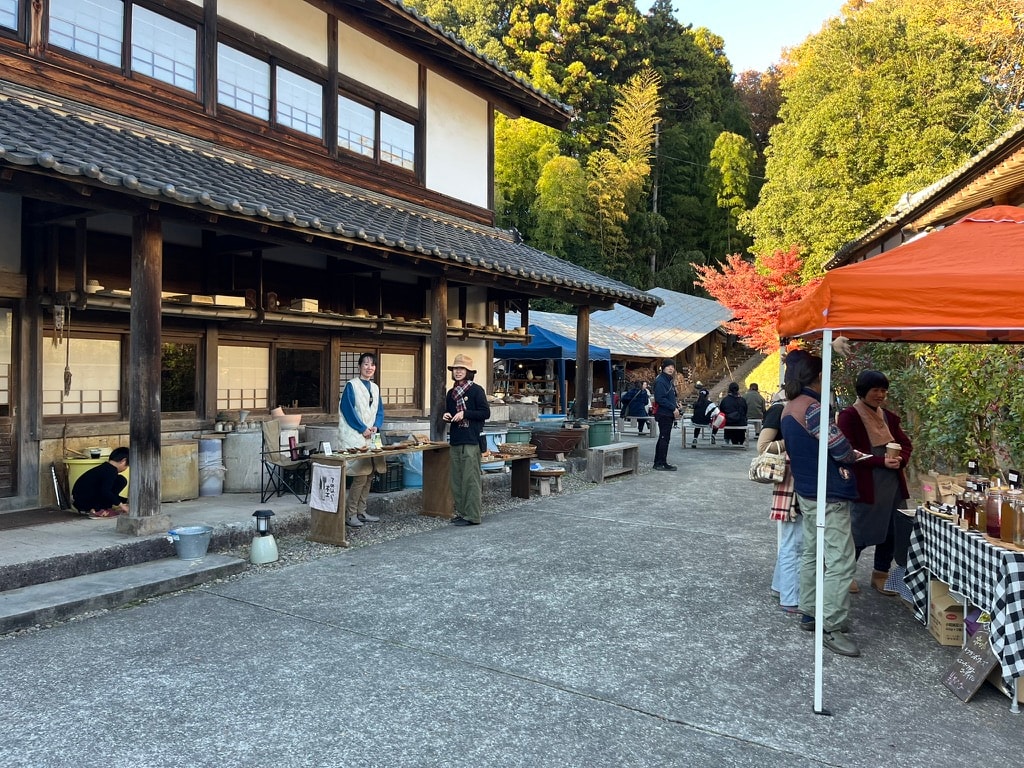
I was walking alone along the side of a country road in Mashiko, craving soba. I hadn't been alone earlier that day. My friends and I had spent the morning at the pottery museum, captivated by the ceramics. Mashiko is known for pottery, and you can feel it everywhere in town. Handmade coffee mugs with your order, sinks made from handmade bowls, and the sound of pottery wheels spinning away in studios. You get the feeling that artists come here to perfect their craft.
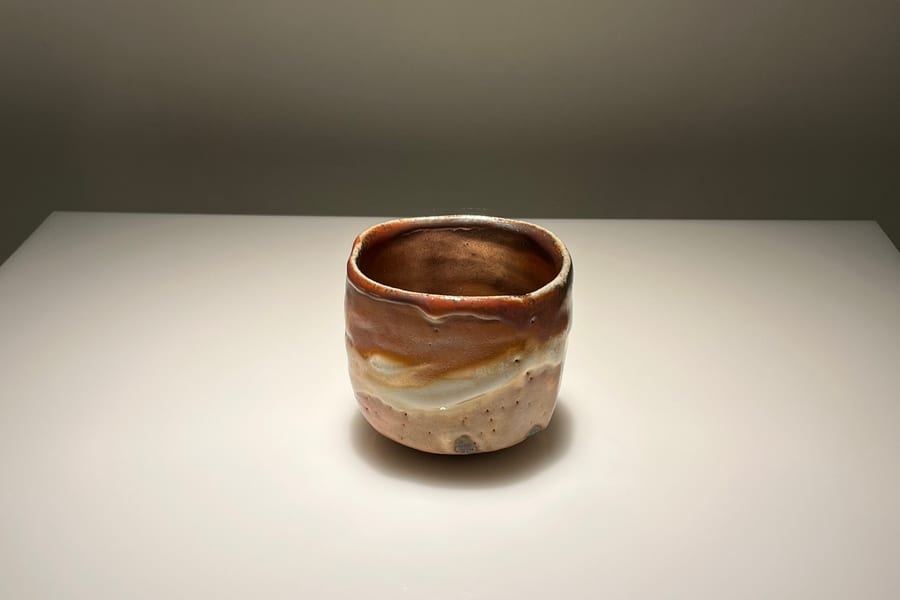
At the pottery museum, we lost track of time and missed the lunch window. By the time we left, we were starving. The only place still open nearby was a pizza restaurant, and my friends were perfectly happy with that. But I had my heart set on traditional Japanese food.
I found a soba restaurant about two miles away and decided to walk there on my own. There were no sidewalks. Just quiet roads stretching through the countryside, with fields of fluffy Japanese silver grass, or susuki, on either side of me. I barely saw a car or another person.
The restaurant, 益子のそば 炉庵 (Mashiko no Soba Roan), was so understated that it almost looked like someone's home. I took off my shoes at the entrance and stepped onto the tatami. I was shown to a low table and given green tea while I looked over the menu. An older woman, an okami-san, came out to serve me, smiling. Around me, families talked and laughed over their meals. There was something instantly comforting about it all.
The menu was simple, centered around hand-rolled soba made from local flour. I ordered the Kenchin soba with tofu, pork, and winter vegetables along with grated yam, or tororo, rice.
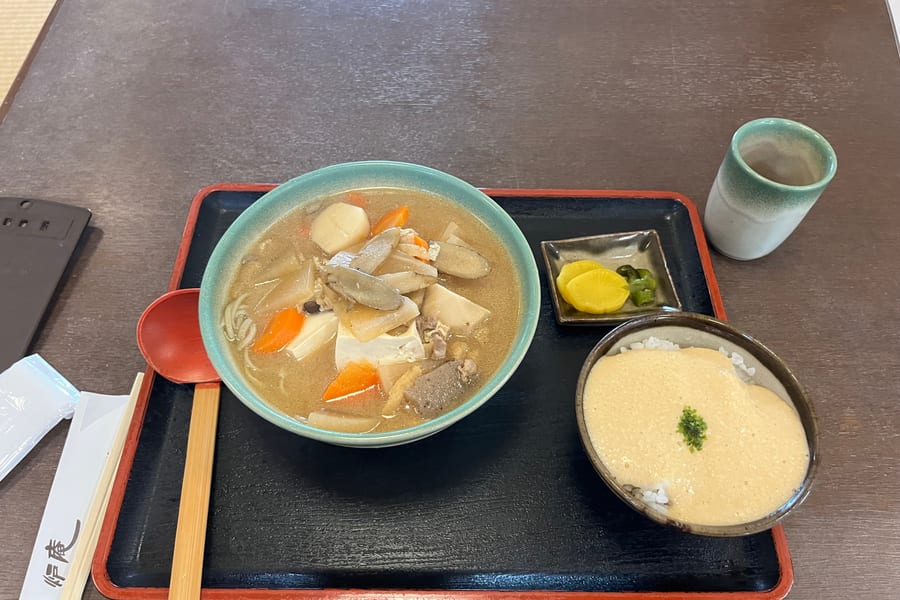
When the woman brought it out, the smell immediately reminded me of a grandmother's cooking. That feeling of being taken care of. The kind of food where you can taste the time and love that went into making it.
The ingredients seemed so simple, but the whole thing tasted like Mashiko in a bowl. Everything was made and grown with such care, and you could taste that quality in every bite. This spontaneous decision ended up being an unexpected surprise, and one of my favorite meals in Japan. The portion was hearty. I wished I had someone there to share it with. But there was something nice about being alone, too. I could just sit there, eat slowly, ponder, and people-watch.
I left with my belly and heart full, and used my newfound energy to keep exploring. I continued to wander down the quiet countryside roads with no real destination. Still no cars. No people.
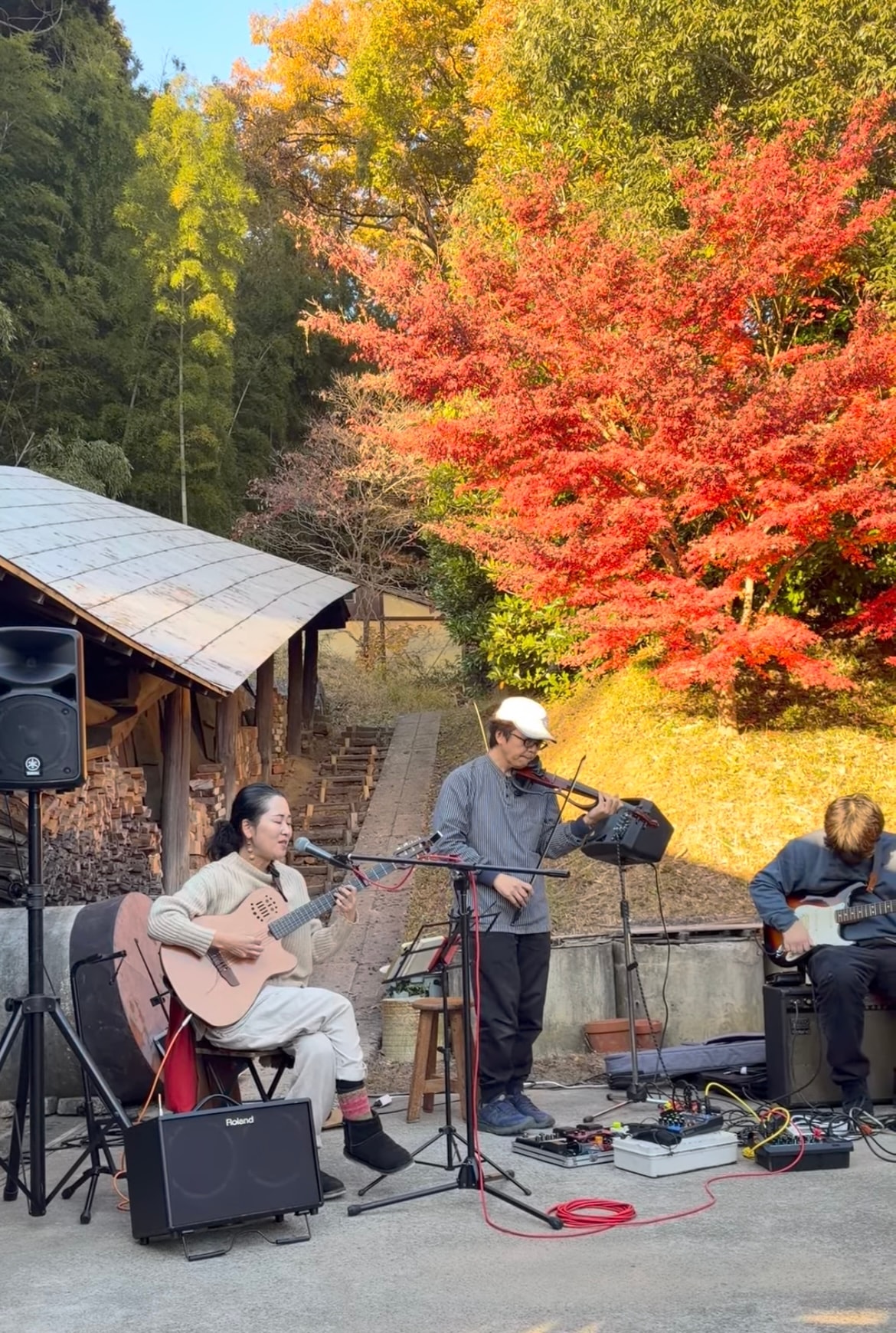
Then I heard the faint sound of music. It sounded like guitar mixed with violin. I wondered where it was coming from because there wasn't a soul in sight. I followed the music down a few roads, as if I could see the music notes creating a path for me. I walked through a wooded area, and eventually into a little cluster of houses tucked into the forest. The music came from a hidden gem: a local Mashiko makers market. I wandered from booth to booth, talking with local bakers, farmers, clothing makers, and woodworkers.
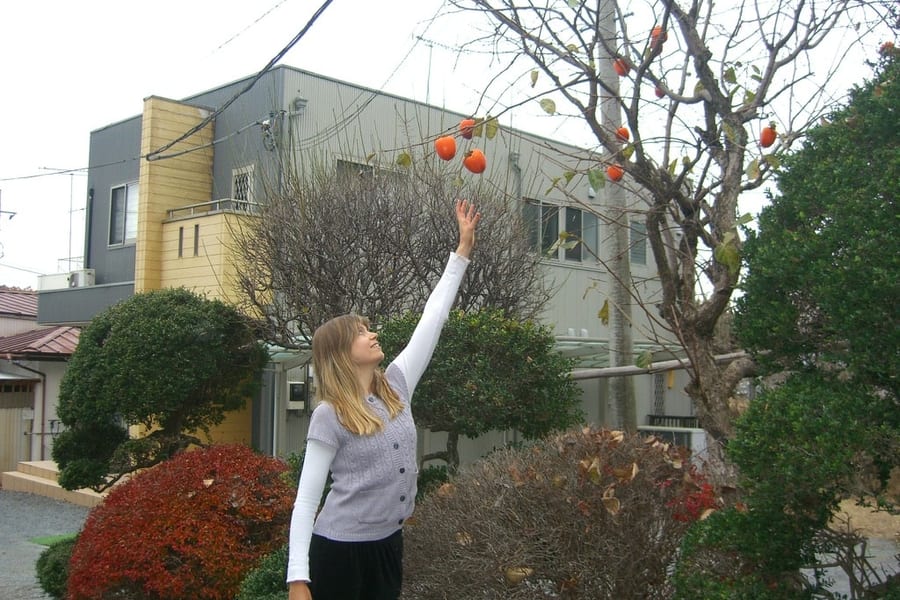
I bought mochi pancake mix made with locally grown rice flour. The farmer who sold it to me handed me a little booklet about their sustainable farm, where they grow persimmons and raise goats.
Of course, I called my friends immediately and told them where I was. They managed to find me, and before long we were all standing together listening to this indie folk jazz band. I watched while drinking homemade root beer made with local Japanese herbs from one of the vendors.
Mashiko is a special town. It isn't particularly easy to get there by public transportation, but that was part of the adventure. My friend Casey had found us a little place to stay — a small cottage that was built to look like a kiln from the outside. An older gentleman hosted us and waited late into the evening when our buses ran behind and we couldn't arrive until after dark.
The pottery was incredible, but what I remember just as much is the kindness of the people, the food, and the way the local culture seemed to permeate everything. People weren't just preserving Mashiko's traditions, they were actively sharing them.
On our last day, my friends and I had wild boar hot pot nearby. We ate, drank, and laughed until the evening faded into night. Then we sat outside our little kiln cottage at the top of a hill, watching the sunset over the beautiful town below, with fields and trees stretching into the distance.
I didn't know it then, but these special moments would become some of my favorite memories. Mashiko became one of my favorite places, too.
Sometimes you create these memories by planning every detail, and sometimes the best ones come from following the music. ❀
About the Author
Christelle Auzas
Filmmaker and storyteller. Christelle travels to capture the character of a place — through food, people, and the quiet details most visitors walk past.
More from Christelle →