
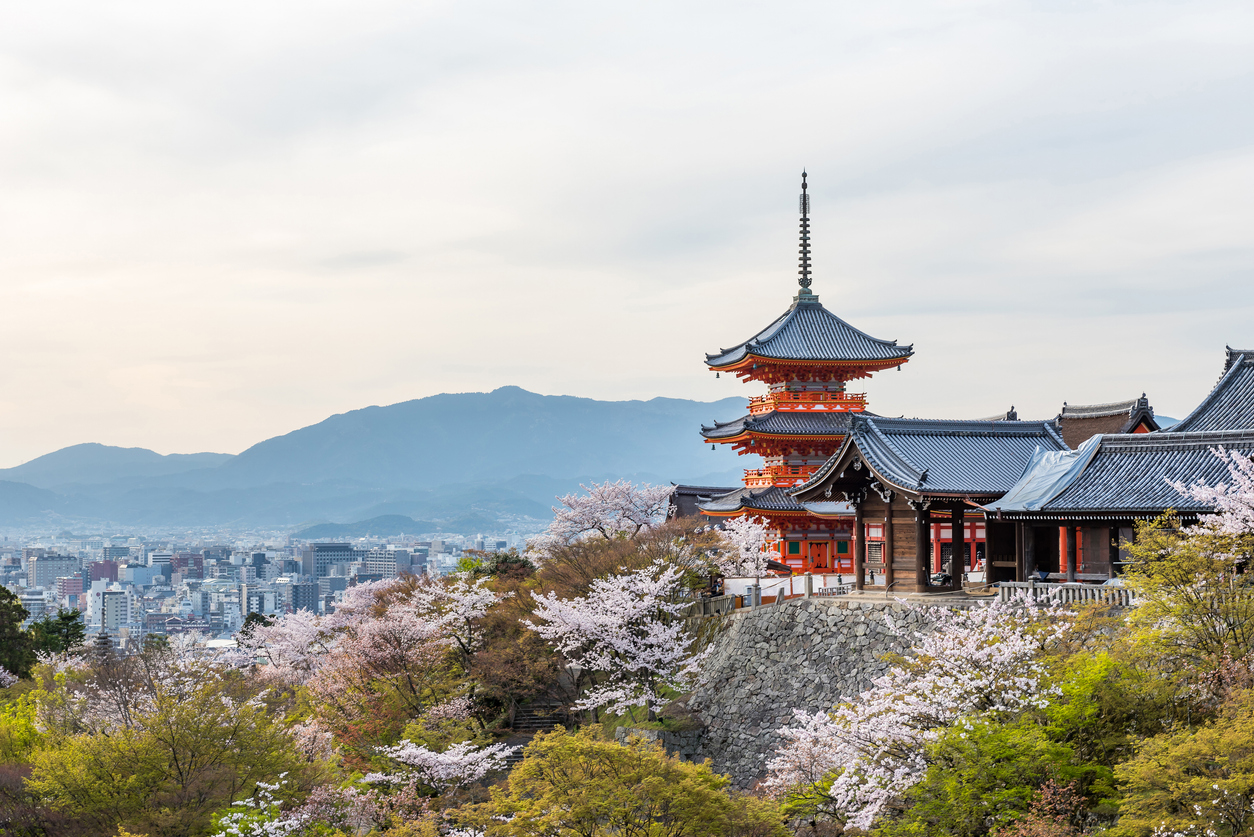
Travel Guide · Japan
Kyoto
Ancient temples, bamboo forests, and the birthplace of kaiseki. Japan at its most refined.
At a Glance
Best Season
Mar–May · Oct–Nov
Ideal Duration
5–7 days
Budget
$$–$$$$$
Vibe
Serene · Cultural · Culinary
Fly Into
Osaka (KIX) or Tokyo (NRT)
Currency
Yen (¥)
The City
Why Kyoto Is Unlike Anywhere Else
Kyoto was Japan's imperial capital for over a thousand years, and the weight of that history is present in everything — the temples, the food, the way people move through the city. It has more UNESCO World Heritage Sites than almost any city on earth, and yet it never feels like a museum.
The city is built on a grid between three mountain ranges, and the contrast between the urban centre and the forested hills is one of its defining qualities. Within twenty minutes of the city centre you can be walking through bamboo groves, climbing mountain paths to remote shrines, or sitting in a garden that has barely changed in five centuries.
The best version of Kyoto is found early in the morning, before the tour groups arrive — at Fushimi Inari at dawn, in the bamboo grove at Arashiyama before 7am, on the Philosopher's Path in autumn when the maples are turning. This guide will help you find that version.
Day by Day
The Perfect 5-Day Itinerary
Day 1
Arrive & Settle into Higashiyama
Take the Shinkansen from Tokyo or fly into Osaka and transfer to Kyoto. Check into your ryokan in the Higashiyama district — the most atmospheric neighbourhood in the city. Walk the stone-paved Ninenzaka and Sannenzaka lanes at dusk, when the crowds thin and the lanterns come on. Dinner at a small izakaya on Gion's backstreets.
Day 2
Fushimi Inari & Gion
Rise early for Fushimi Inari — the thousands of vermilion torii gates that climb the mountain behind the shrine. Arrive before 7am to have the lower paths to yourself. Afternoon in Gion: the Hanamikoji street, Kennin-ji temple, and the chance of spotting a geiko or maiko heading to an evening appointment.
Day 3
Arashiyama & the Bamboo Grove
The bamboo grove at Arashiyama is one of the most photographed places in Japan — and one of the most extraordinary to experience in person. Go at dawn. Afterwards, rent a boat on the Oi River, visit Tenryu-ji's garden, and walk the Sagano Romantic Train route through the Hozu River gorge.
Day 4
Nishiki Market & Philosopher's Path
Morning at Nishiki Market — Kyoto's kitchen, a narrow covered arcade of food stalls, pickles, tofu, and street snacks. Afternoon on the Philosopher's Path: the canal-side walk from Nanzen-ji to Ginkaku-ji (the Silver Pavilion), lined with cherry trees in spring and maples in autumn.
Day 5
Tea Ceremony & Kaiseki Dinner
Book a private tea ceremony in the morning — Urasenke or Omotesenke, the two great Kyoto tea schools, both offer experiences for visitors. Spend the afternoon at Kinkaku-ji (the Golden Pavilion) and Ryoan-ji's famous rock garden. End with a kaiseki dinner — the multi-course Japanese haute cuisine that Kyoto invented.
Accommodation
Where to Stay
From the world's finest ryokan to a forest sanctuary — Kyoto's accommodation is as extraordinary as the city itself.

Ryokans & Forest Retreats
Kyoto, Japan
Luxury Resort
Aman Kyoto
Hidden in a forest at the foot of the Kitayama mountains, Aman Kyoto is the finest hotel in Japan. The rooms are vast, the onsen extraordinary, and the service invisible in the best possible way. A sanctuary in the truest sense.
Best for: The ultimate Kyoto experience
Traditional Ryokan
Tawaraya Ryokan
Founded in the early 1700s, Tawaraya is the most celebrated ryokan in Japan. Sixteen rooms, impeccable kaiseki cuisine, and a garden that has barely changed in three centuries. Guests have included Steve Jobs and the Rockefellers.
Best for: Traditional Japanese culture immersion
Boutique Hotel
The Celestine Kyoto Gion
A beautifully designed modern hotel in the heart of Gion, with rooms that reference traditional machiya townhouse architecture. Excellent value for the location and quality of service.
Best for: First-time visitors & design lovers
Dining
Where to Eat
The birthplace of kaiseki cuisine, with more Michelin stars per capita than Paris. Kyoto's food culture is without equal.

From Street Food to Kaiseki
Higashiyama
Kikunoi Honten
Three Michelin stars and one of the great kaiseki restaurants in Japan. Chef Murata's cooking is rooted in the Kyoto tradition — seasonal, restrained, and deeply beautiful. The private tatami rooms overlooking the garden are among the finest dining settings in the world.
Must order: The seasonal kaiseki omakase
Nishiki Market
Nishiki Warai
The best introduction to Kyoto's food culture: grilled skewers, fresh tofu, pickled vegetables, and sake at the counter. Unpretentious, delicious, and exactly what you should be eating for lunch.
Must order: Yuba (tofu skin) and grilled mochi
Higashiyama
Mizai
A three-Michelin-star kaiseki restaurant in a converted machiya townhouse. Chef Hisato Nakahigashi forages many of his own ingredients from the mountains around Kyoto — the result is some of the most personal and distinctive cooking in the city.
Must order: Whatever the chef is foraging that week
Experiences
What to Do

The Bamboo Grove at Dawn
Arashiyama, Kyoto
Fushimi Inari
Thousands of vermilion torii gates climbing the mountain. Arrive before 7am for the lower paths to yourself — by 9am it is a crowd.
Arashiyama Bamboo Grove
One of the most extraordinary natural experiences in Japan. Dawn is the only time to see it properly. The light through the bamboo is unlike anything else.
Gion District at Dusk
The best chance of spotting a geiko or maiko heading to an evening appointment. Walk Hanamikoji street between 5pm and 7pm.
Private Tea Ceremony
Book a private ceremony at Urasenke or Omotesenke — the two great Kyoto tea schools. A two-hour experience that reframes the way you think about attention.
Philosopher's Path
The canal-side walk from Nanzen-ji to Ginkaku-ji. Extraordinary in cherry blossom season and autumn. A gentle hour each way.
Nishiki Market
Kyoto's covered food market — pickles, tofu, grilled skewers, and street snacks. The best introduction to the city's food culture.
Local Knowledge
Insider Tips
Book Aman Kyoto and Tawaraya six months ahead — both are perennially full and do not accept last-minute reservations.
The bamboo grove at Arashiyama is genuinely magical at dawn. By 9am it is a crowd. Set your alarm.
Kyoto's best food is not in restaurants — it's in Nishiki Market, at the temple food stalls, and in the depachika (department store basement food halls).
Rent a bicycle. The city is flat, the cycling infrastructure is excellent, and it's the best way to move between the eastern and western temple districts.
Cherry blossom season (late March to mid-April) and autumn foliage (mid-November) are extraordinary — and extremely crowded. Book accommodation a year ahead for these periods.
Is It Right for You?
Who Kyoto Is For
Culture Seekers
More UNESCO World Heritage Sites than almost any city on earth. Temples, shrines, gardens, and traditional arts at every turn.
Food Lovers
The birthplace of kaiseki cuisine and home to more Michelin stars per capita than Paris. Kyoto's food culture is without equal.
Photographers
Fushimi Inari at dawn, the bamboo grove, the geisha district at dusk — Kyoto is one of the most photogenic cities in the world.
Slow Travellers
Kyoto rewards those who linger. The more time you give it, the more it reveals. Five days is a minimum; seven is better.
Keep Exploring
More Travel Guides
From the Maldives to Patagonia — every destination, covered in depth.