
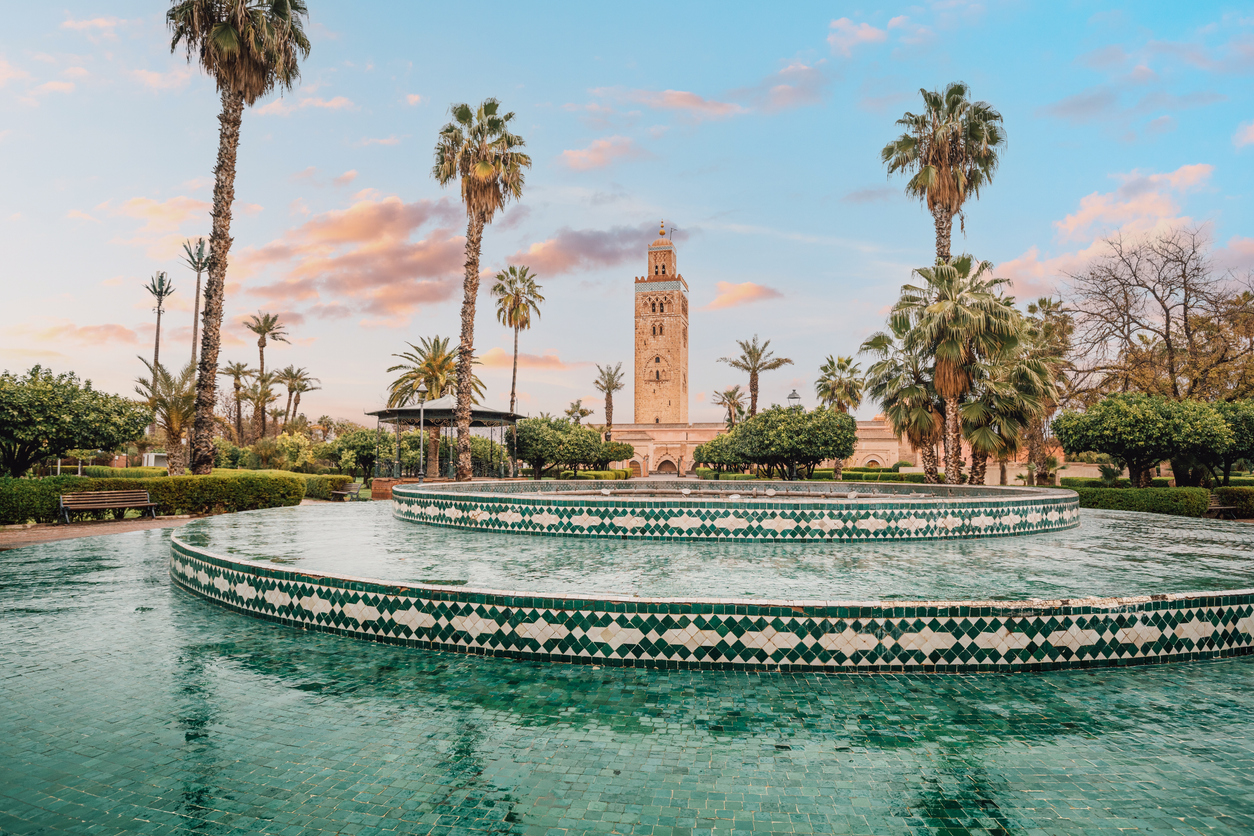
Travel Guide · Morocco
Marrakech
Ancient medina, palace hotels, and the most extraordinary square in the world. Morocco at its most intoxicating.
At a Glance
Best Season
Oct – April
Ideal Duration
4–6 days
Budget
$$–$$$$$
Vibe
Sensory · Vibrant · Exotic
Fly Into
Marrakech (RAK)
Currency
Dirham (MAD)
The City
Why Marrakech Gets Under Your Skin
Marrakech is one of those cities that assaults you on arrival and seduces you by departure. The medina — the ancient walled city — is a UNESCO World Heritage Site and one of the best-preserved medieval Islamic cities in the world. The souks, the mosques, the riads, the hammams: all of it is still functioning, still alive, still extraordinary.
The city sits at the foot of the High Atlas Mountains, and the contrast between the terracotta city and the snow-capped peaks behind it is one of the great visual experiences in North Africa. In winter, you can ski in the Atlas in the morning and eat tagine in the medina by evening.
The best version of Marrakech is found in the early morning, before the heat and the crowds — walking the empty lanes of the medina at 7am, when the light is golden and the city belongs to its residents. This guide will help you find that version.
Day by Day
The Perfect 5-Day Itinerary
Day 1
Arrive & Enter the Medina
Land at Menara Airport and transfer to your riad in the medina. The contrast between the modern airport and the ancient city is immediate and total. Check in, change, and walk to Djemaa el-Fna at dusk — the great square of Marrakech, where snake charmers, storytellers, and food stalls create one of the most extraordinary spectacles in the world.
Day 2
The Souks & Medersa Ben Youssef
Spend the morning in the souks — the labyrinthine covered markets of the medina, organised by trade: spices, leather, textiles, metalwork, ceramics. Get lost. That is the point. Afternoon at Medersa Ben Youssef, the 14th-century Islamic college with the most beautiful courtyard in Morocco.
Day 3
Majorelle Garden & Palmeraie
Morning at the Majorelle Garden — the cobalt-blue villa and botanical garden created by Jacques Majorelle and later owned by Yves Saint Laurent. Afternoon in the Palmeraie, the palm grove north of the city, for a camel ride or quad bike excursion. Dinner at a rooftop restaurant overlooking the medina.
Day 4
Day Trip to the Atlas Mountains
A full day in the High Atlas — the mountain range that rises dramatically south of Marrakech. Drive to the Ourika Valley or the village of Imlil, hike through Berber villages, and have lunch at a mountain guesthouse. The contrast with the city is extraordinary.
Day 5
Hammam & Farewell Dinner
A morning at a traditional hammam — the Moroccan bathhouse ritual of steam, black soap, and kessa scrub. Book a private hammam at your riad or at one of the city's finest spa hotels. Afternoon at leisure in the souks for last-minute purchases. Farewell dinner at one of Marrakech's great restaurants.
Accommodation
Where to Stay
From the legendary La Mamounia to intimate riads hidden in the medina's labyrinth.

Palace Hotels & Hidden Riads
Marrakech, Morocco
Grand Palace Hotel
La Mamounia
The most famous hotel in Africa, set in 17 acres of gardens inside the medina walls. Winston Churchill painted here. The rooms are magnificent, the pool is legendary, and the restaurants are among the finest in Morocco. A genuine institution.
Best for: The definitive Marrakech experience
Luxury Riad
El Fenn
A beautifully designed riad in the heart of the medina — 28 rooms, a rooftop pool, and some of the most thoughtful design in Marrakech. The rooftop bar at sunset, with views over the medina to the Atlas Mountains, is one of the great moments in Moroccan travel.
Best for: Design lovers & rooftop sunset seekers
Boutique Riad
Riad Yasmine
A smaller, more intimate riad with a famous turquoise pool that has been photographed by every travel magazine in the world. Excellent service, beautiful rooms, and a location that puts you in the heart of the medina.
Best for: First-time visitors to Marrakech
Dining
Where to Eat
Moroccan cuisine is one of the great food cultures of the world. Marrakech is the best place to experience it.

Tagines, Bastilla & Rooftop Dining
Medina
Le Foundouk
A converted 18th-century caravanserai with a rooftop terrace overlooking the medina. The cooking is a sophisticated take on Moroccan classics — bastilla, tagine, couscous — with French technique applied to local ingredients. One of the finest restaurants in the city.
Must order: The pigeon bastilla and the lamb tagine with preserved lemon
Spice Square
Nomad
A rooftop restaurant above the spice market with a menu that reinterprets Moroccan street food for a contemporary audience. The best lunch spot in the medina — the kefta sliders and the harira soup are exceptional.
Must order: Kefta sliders and the harira soup
Medina
Dar Yacout
The most theatrical dining experience in Marrakech — a 17th-century palace with candlelit courtyards, live Gnawa music, and a procession of traditional Moroccan dishes. More spectacle than restaurant, but the spectacle is extraordinary.
Must order: The full Moroccan feast — let the kitchen decide
Experiences
What to Do

Djemaa el-Fna at Dusk
Marrakech, Morocco
The Souks
The labyrinthine covered markets of the medina, organised by trade. Spices, leather, textiles, metalwork, ceramics. Hire a guide for the first morning.
Djemaa el-Fna
The great square of Marrakech — snake charmers, storytellers, food stalls, and musicians. Best at dusk when the food stalls set up and the square transforms.
Majorelle Garden
The cobalt-blue villa and botanical garden created by Jacques Majorelle and later owned by Yves Saint Laurent. One of the most beautiful gardens in Africa.
Traditional Hammam
The Moroccan bathhouse ritual — steam, black soap, kessa scrub. Book a private hammam at your riad or at one of the city's spa hotels.
Atlas Mountains Day Trip
An hour from the city, the High Atlas offers trekking, Berber villages, and mountain guesthouses. The contrast with the medina is extraordinary.
Medersa Ben Youssef
The 14th-century Islamic college with the most beautiful courtyard in Morocco. The tilework, carved plaster, and cedar woodwork are extraordinary.
Local Knowledge
Insider Tips
Hire a local guide for your first morning in the souks. The medina is genuinely labyrinthine — a guide will save you hours of confusion and introduce you to artisans you would never find alone.
Djemaa el-Fna is best at dusk, when the food stalls set up and the square transforms. Arrive around 6pm and stay for two hours.
Bargaining in the souks is expected and part of the culture. Start at 40% of the asking price and meet somewhere in the middle. Never accept the first price.
The heat in summer (June–August) is extreme — 40°C is common. October to April is the ideal window.
Book La Mamounia well in advance. It is one of the most sought-after hotels in Africa and fills quickly, especially during the winter season.
Is It Right for You?
Who Marrakech Is For
Sensory Travellers
Marrakech is one of the most intense sensory experiences in the world — the smells, sounds, colours, and tastes of the medina are unlike anywhere else.
Design & Architecture Lovers
Moorish architecture, Islamic geometric patterns, and the riad tradition of inward-facing courtyard design. A city that is itself a work of art.
Food Explorers
Moroccan cuisine is one of the great food cultures of the world. Marrakech is the best place to experience it — from street food to palace dining.
Adventure Seekers
The Atlas Mountains are an hour away. Trekking, camel rides, quad bikes, and Berber village homestays are all within easy reach.
Keep Exploring
More Travel Guides
From Kyoto to Patagonia — every destination, covered in depth.