
Travel Guide · Greece
Santorini
Clifftop villages, volcanic beaches, and sunsets that stop time. The Aegean at its most theatrical.
At a Glance
Best Season
Late April – October
Ideal Duration
5–7 days
Budget
$$$$$
Vibe
Romantic · Scenic · Culinary
Fly Into
Santorini (JTR)
Currency
Euro (€)
The Island
Why Santorini Still Earns Its Reputation
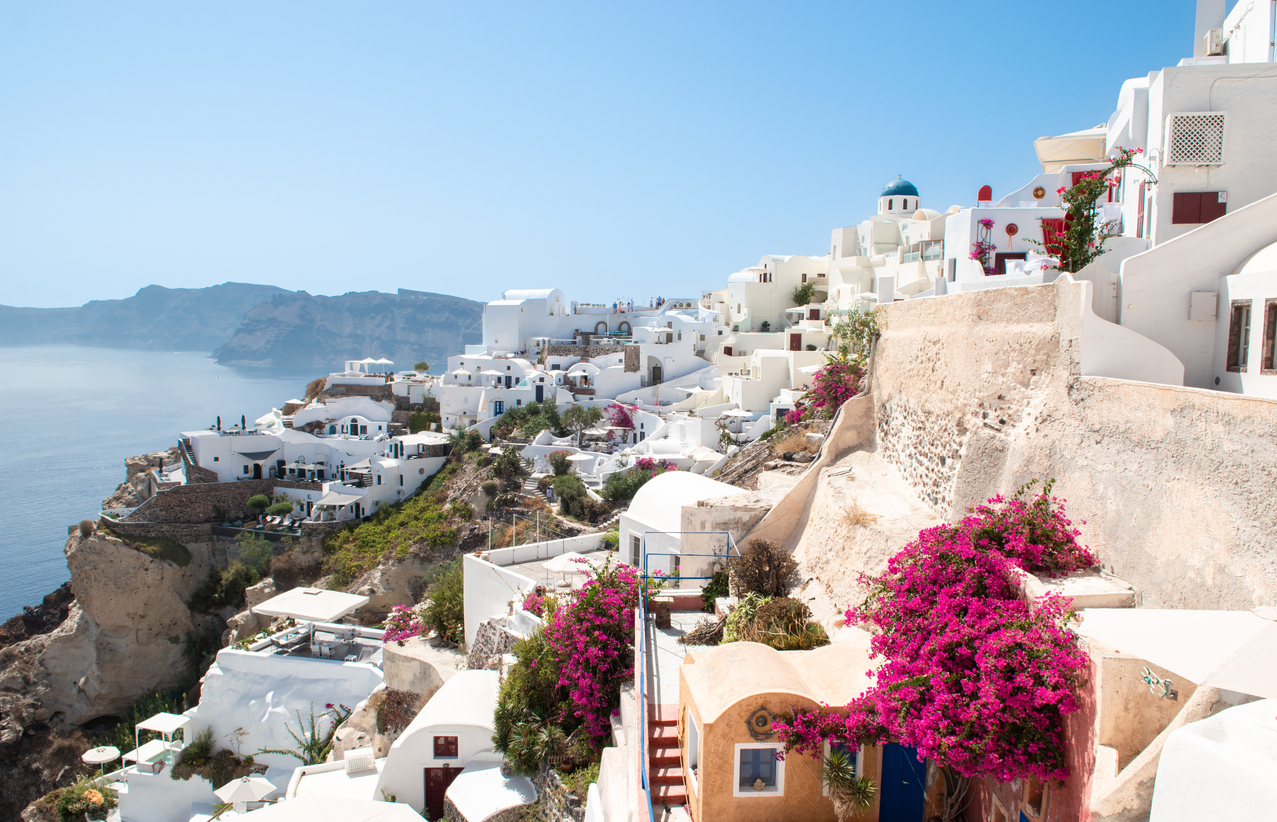
Santorini is one of those places that has been photographed so many times it risks feeling like a cliché before you arrive. The blue domes, the white cubic houses, the caldera sunsets — you've seen them all. And then you get there, and you understand why people keep coming back.
The island is the remnant of a massive volcanic eruption that occurred around 1627 BC — one of the largest in human history. The caldera, the dramatic cliffs, the black and red sand beaches: all of it is the aftermath of that cataclysm. There is a geological violence beneath the beauty that gives Santorini its particular character.
The best version of Santorini is found away from the cruise ship crowds — in the villages of Pyrgos and Megalochori, at the archaeological site of Akrotiri at dawn, on a private catamaran in the caldera at sunset. This guide will help you find that version.
Day by Day
The Perfect 5-Day Itinerary
Day 1
Arrive & Settle into Oia
Land at JTR and transfer directly to Oia — the island's most iconic village. Check into your cave hotel, take a slow walk along the caldera path, and end the day at a cliffside bar watching the sun dissolve into the Aegean. No agenda. Just arrival.
Day 2
Fira & the Caldera Walk
Walk the 10km caldera path from Fira to Oia — one of the great walks in Europe. The trail hugs the volcanic rim with views across the caldera at every turn. Stop at Imerovigli for lunch at a terrace restaurant. Return by cable car or donkey.
Day 3
Akrotiri & the Black Sand Beaches
Morning at Akrotiri — the Minoan city buried by the 1627 BC eruption, often called the "Greek Pompeii." Afternoon at Perissa or Perivolos, the black sand beaches on the island's south coast. Dinner at a taverna in Pyrgos village.
Day 4
Catamaran Day on the Caldera
A full day sailing the caldera on a private or small-group catamaran. Swim in the hot springs near Nea Kameni, snorkel the volcanic reefs, and have lunch served on deck. The perspective of the island from the water is unlike anything from shore.
Day 5
Wine Country & Sunset Ritual
Santorini's volcanic soil produces some of Greece's most distinctive wines — particularly the indigenous Assyrtiko grape. Visit Santo Wines or Domaine Sigalas for a tasting with caldera views. Return to Oia for the sunset: arrive early, find your spot, and let it happen.
Accommodation
Where to Stay
All three properties are in Oia — the only village worth staying in for a first visit.

Cave Hotels & Caldera Suites
Oia, Santorini
Cave Hotel
Canaves Oia Epitome
The most architecturally dramatic hotel on the island. Carved into the caldera cliff, each suite has a private infinity pool and unobstructed caldera views. The service is impeccable and the breakfast — served on your terrace — is the best on Santorini.
Best for: Honeymoons & special occasions
Luxury Boutique
Mystique
A collection of cave suites and villas cascading down the caldera in Oia. The Charisma suite with its private pool and 180° caldera view is one of the great hotel rooms in Greece. The Asea restaurant is worth a reservation even if you're not staying.
Best for: Design lovers & privacy seekers
Boutique
Andronis Boutique Hotel
A more intimate option in Oia with cave suites, a beautiful pool terrace, and some of the warmest service on the island. The location — steps from the famous blue-domed churches — is unbeatable.
Best for: First-time visitors to Santorini
Dining
Where to Eat
Santorini's cuisine is built on extraordinary local ingredients — fava, cherry tomatoes, capers, white aubergine, and the island's volcanic wines.

From Taverna to Tasting Menu
Pyrgos
Selene
The finest restaurant on the island, set in a restored neoclassical building in Pyrgos village. Chef Ettore Botrini's tasting menu is a love letter to Cycladic ingredients — Santorini fava, cherry tomatoes, capers, and the island's extraordinary wines.
Must order: The Santorini fava with sea urchin
Exo Gonia
Metaxy Mas
The locals' favourite — a no-frills taverna in a village most tourists never find. The grilled octopus, slow-cooked lamb, and house wine are exceptional. Book ahead; it fills every night.
Must order: Grilled octopus and the lamb kleftiko
Oia
Lauda
The rooftop restaurant at Andronis Boutique Hotel, with a caldera view that makes every dish taste better. The sunset tasting menu is a Santorini institution — book the earliest seating to catch the light.
Must order: The sunset tasting menu
Experiences
What to Do

Sail the Caldera
The island looks entirely different from the water
Caldera Walk
The 10km path from Fira to Oia is one of Europe's great walks. Allow 3–4 hours and start early to beat the heat.
Akrotiri Archaeological Site
The Minoan city buried by the 1627 BC eruption. One of the most significant Bronze Age sites in the world.
Private Catamaran
A full day sailing the caldera, swimming in hot springs, and watching the sunset from the water. Book a private charter for the best experience.
Wine Tasting
Santorini's volcanic soil produces extraordinary Assyrtiko. Visit Santo Wines or Domaine Sigalas for a tasting with caldera views.
Black Sand Beaches
Perissa and Perivolos on the south coast have dramatic black volcanic sand. Arrive early — they fill by midday in summer.
Sunset at Oia Castle
The most famous sunset in Greece. Arrive 45 minutes early, find a spot on the castle ruins, and let the Aegean do the rest.
Local Knowledge
Insider Tips
Book your sunset spot in Oia at least 30 minutes early — the famous viewpoint fills fast. The castle ruins offer the best angle.
Hire a car or ATV for at least one day. The island is small but the villages away from Oia and Fira are where you'll find the real Santorini.
Visit Akrotiri first thing in the morning before the cruise ship crowds arrive. The site is extraordinary and deserves your full attention.
The local Assyrtiko wine is one of Greece's great grapes. Order it everywhere — it's the perfect match for the island's seafood.
Stay at least 5 nights. Two or three days is not enough to see beyond the Instagram Santorini.
Is It Right for You?
Who Santorini Is For
Honeymooners
The most romantic island in Europe. Cave suites, private pools, and sunsets that feel designed for two.
Food & Wine Lovers
Exceptional local cuisine, indigenous wines, and a growing fine dining scene anchored by Selene.
Architecture Enthusiasts
The Cycladic architecture — white cubic forms, blue domes, cave dwellings — is unlike anywhere else on earth.
First-Time Greece Visitors
An ideal introduction to Greece, though be warned: it will ruin you for everywhere else.
Keep Exploring
More Travel Guides
From Kyoto to Patagonia — every destination, covered in depth.