
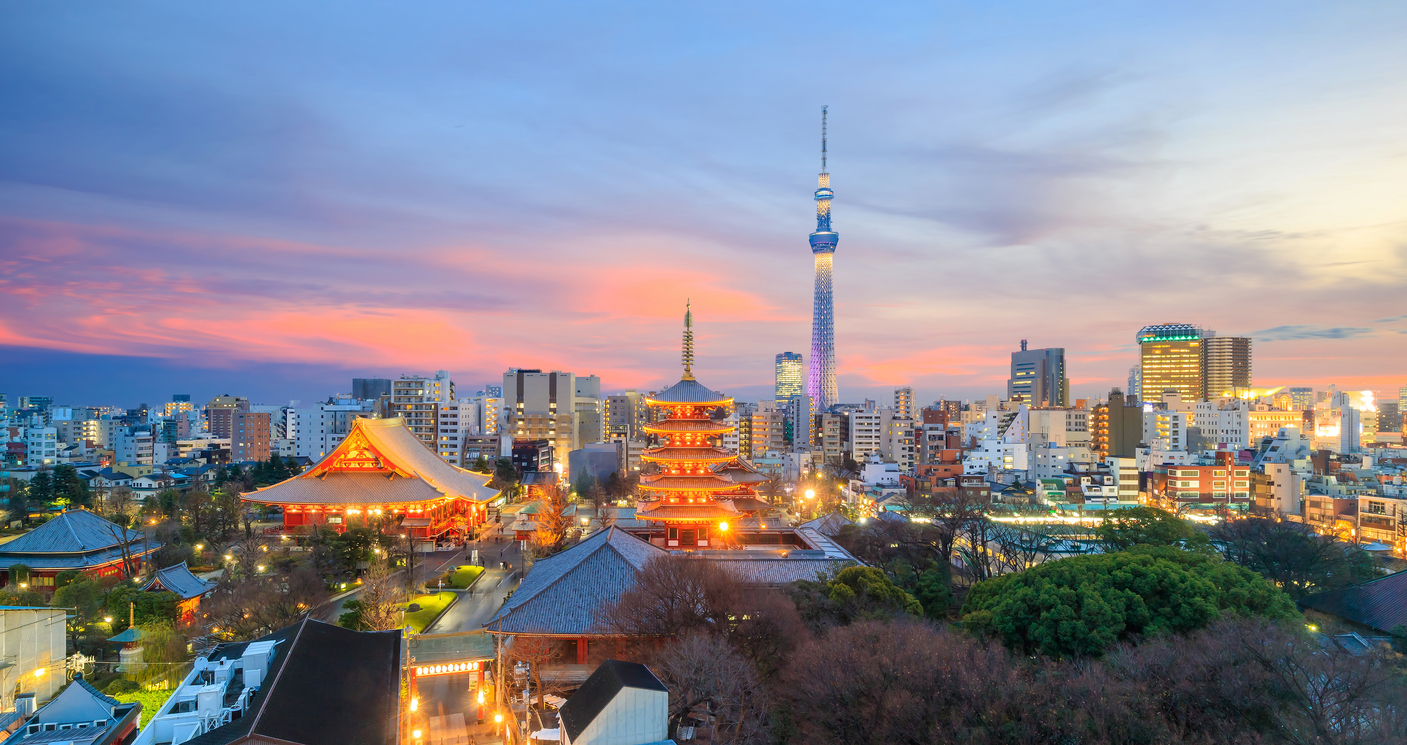
"Japan is the country that has perfected everything it has ever turned its attention to — and food is at the top of that list."
Japan is the world's greatest food destination — a country with more Michelin stars than France, a street food culture of extraordinary depth, and a culinary philosophy built on the pursuit of perfection in every detail. Tokyo alone has more three-Michelin-starred restaurants than any city in the world. Kyoto invented kaiseki. Osaka is the street food capital of Asia. And Okinawa has a cuisine so distinct from mainland Japan that it might as well be a different country. Beyond the food, Japan offers the world's finest ryokan tradition, the most beautiful temple gardens in Asia, and a culture of hospitality — omotenashi — that is unmatched anywhere on earth.
Japan rewards the traveller who moves slowly and pays attention. The Shinkansen bullet train connects Tokyo to Kyoto in two hours and Kyoto to Hiroshima in one — making it possible to cover extraordinary ground without sacrificing depth. The best Japan itinerary combines the urban intensity of Tokyo with the cultural depth of Kyoto, the warmth of Osaka, and the natural beauty of at least one rural region. Cherry blossom season (late March to mid-April) and autumn foliage season (October to November) are the peak times — extraordinary, but crowded. May, June, and September offer the best balance of weather and manageable crowds.
"Tokyo has more Michelin stars than any city in the world — and the best meal you'll eat there will cost ¥800 at a standing ramen bar."
TastesOf Editorial
At a Glance
Regions to Explore
Tokyo
The world's greatest city for food — more Michelin stars than any other city on earth, a street food culture of extraordinary depth, and a dining scene that ranges from three-star kaiseki temples to standing ramen bars that have been perfecting their broth for decades. The city is also a masterclass in urban design, fashion, and the art of the department store basement.
Kyoto
Japan's ancient imperial capital — 1,600 Buddhist temples, 400 Shinto shrines, and the birthplace of kaiseki cuisine. The geisha districts of Gion and Pontocho, the bamboo groves of Arashiyama, and the golden pavilion of Kinkaku-ji are the obvious highlights; the moss gardens and the hidden machiya townhouses are the real ones.
Osaka
Japan's kitchen — a city of extraordinary street food (takoyaki, okonomiyaki, kushikatsu), a nightlife culture centred on the Dotonbori canal, and a warmth and directness that is distinctly its own. The Kuromon Ichiba market and the Shinsekai neighbourhood are essential.
Okinawa
Japan's southernmost prefecture — a chain of subtropical islands with coral reefs, turquoise water, and a culture that is distinct from mainland Japan. The Ryukyu Kingdom's castles, the traditional Okinawan cuisine (champuru, goya, awamori), and the beaches of the Kerama Islands are the highlights.
Hokkaido
Japan's northernmost island — extraordinary skiing at Niseko, the finest seafood in Japan (sea urchin, crab, scallops), and a landscape of volcanic lakes, lavender fields, and national parks. The Sapporo Snow Festival in February is one of the world's great winter events.
The Japanese Alps
The mountain spine of Honshu — with the historic post towns of the Nakasendo trail, the snow monkeys of Jigokudani, the sake breweries of Matsumoto, and the extraordinary onsen towns of Hakone and Kinosaki. The Shinkansen connects the Alps to Tokyo in under two hours.
Cities We Cover
Tokyo
The world's greatest food city — more Michelin stars than anywhere on earth, and a culture of extraordinary depth and precision.
Kyoto
Japan's ancient imperial capital — 1,600 temples, kaiseki cuisine, and the finest ryokan stays in the world.
Okinawa
Japan's subtropical island chain — coral reefs, Ryukyu culture, and a cuisine unlike anywhere else in Japan.
The Verdict
The world's greatest food destination — spend a week in Tokyo, three days in Kyoto, and never stop eating.