
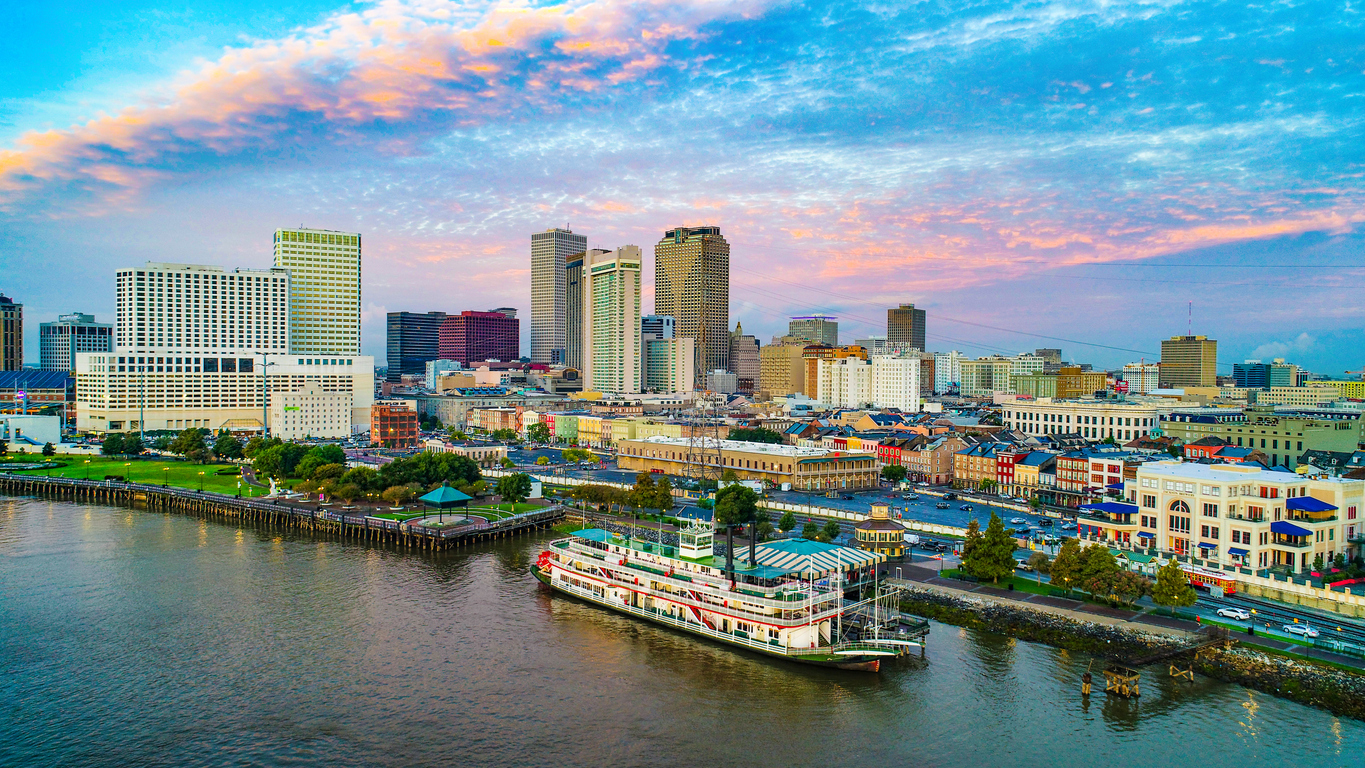
"There is no city in America quite like New Orleans — and no city in the world that celebrates food, music, and the art of living with quite the same abandon."
New Orleans is the most culturally distinctive city in the United States — a place shaped by French and Spanish colonial rule, by the enslaved Africans who built it and whose culture defines it, by the Haitian refugees who brought their traditions across the Gulf, and by the waves of Irish, Italian, and German immigrants who added their own threads to the city's extraordinary cultural fabric. The result is a city unlike any other in America: a place where the food is a genuine cuisine — Creole and Cajun, two of the great cooking traditions of the world — where the music is a living art form that fills the streets, and where the architecture, the festivals, and the rituals of daily life are infused with a beauty and a strangeness that is entirely its own.
For the serious food traveller, New Orleans is essential. The city's restaurant culture — from the grand Creole institutions of the French Quarter to the neighbourhood joints of the Tremé to the exciting new generation of chefs reinterpreting Louisiana's culinary heritage — is one of the great dining scenes in the world. And the cocktail culture, which gave the world the Sazerac, the Ramos Gin Fizz, and the Hurricane, is the most historically rich in America.
Where to Explore
The Neighbourhoods
The French Quarter
The oldest neighbourhood in New Orleans — and the one that defines the city's image worldwide. The iron-lace balconies, the gas lamps, the street musicians, and the smell of beignets and café au lait from Café Du Monde are the essential New Orleans experience. Bourbon Street is the famous artery, but the real French Quarter lives on Royal Street, Chartres Street, and the quieter blocks toward the river.
The Garden District
The most beautiful residential neighbourhood in the American South — a canopy of live oaks shading block after block of antebellum mansions, Greek Revival townhouses, and Italianate villas. The Magazine Street corridor, running through the heart of the Garden District, is the finest shopping and dining street in New Orleans outside the French Quarter.
Tremé
The oldest African American neighbourhood in the United States — and the birthplace of jazz. The Tremé is where the music that defines New Orleans was born, and where it is still played with the most authenticity. The Backstreet Cultural Museum, the St. Augustine Church, and the Tremé's second-line parade tradition are essential.
Bywater & Marigny
The most creative and bohemian neighbourhoods in New Orleans — a stretch of Creole cottages and shotgun houses along the river, filled with art galleries, music venues, and the city's most exciting new restaurants. The Frenchmen Street music scene, in the Marigny, is the finest live jazz experience in New Orleans.
Where to Eat
Essential New Orleans Tables
"New Orleans doesn't just have a food culture — it has a food religion. Every meal is a ceremony, every restaurant a cathedral."
Alyssa Ross · TastesOf