
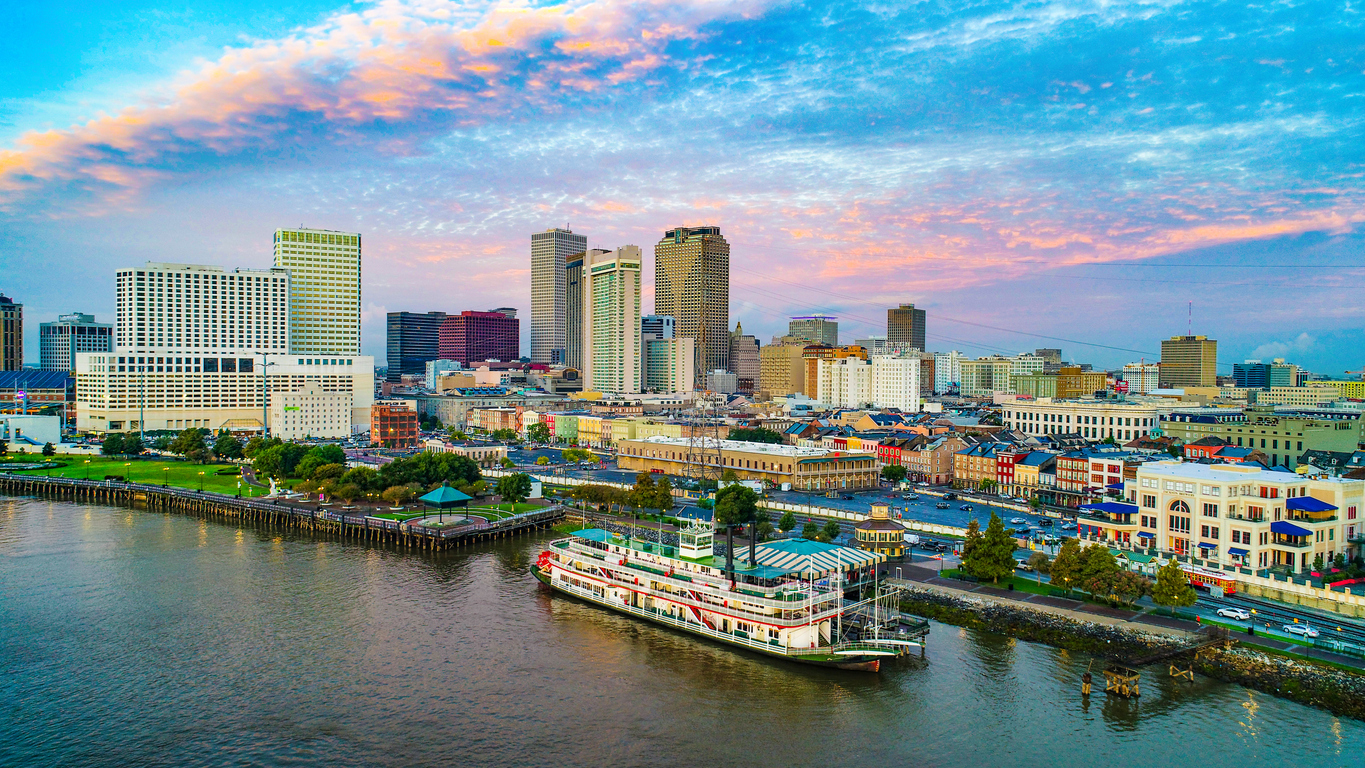
"No city in America eats like New Orleans. No city celebrates like New Orleans. And no city, once it has you, ever quite lets you go."
New Orleans is the most culturally distinctive city in the United States — a place where French and Spanish colonial architecture lines streets named after the Muses, where the food is a genuine world cuisine shaped by African, Caribbean, and European traditions, and where the music that changed the world was born in the second-line parades and the Storyville brothels of the early 20th century. It is a city that has survived hurricanes, floods, and centuries of hardship with a resilience and a joy that is entirely its own.
For the food traveller, New Orleans is one of the essential American cities — a place where the restaurant culture runs deeper than almost anywhere else in the country, where the cocktail is an art form with a documented history stretching back to the 1830s, and where the street food — the beignets, the po'boys, the muffulettas, the snowballs — is as worthy of serious attention as the white-tablecloth institutions of the French Quarter.
At a Glance
Where to Stay
The Best Hotels in New Orleans
Four Seasons New Orleans
Read Review →The finest hotel in Louisiana — a soaring tower above the Mississippi River at the foot of Canal Street, with panoramic river views, the best Creole restaurant in the city, and the most glamorous Chandelier Bar in the South. The rooftop pool on the 34th floor is the finest in New Orleans. The only address for the serious luxury traveller.
Hotel Monteleone
Read Review →The most storied hotel in the French Quarter — a family-owned landmark on Royal Street since 1886, an officially designated international Literary Landmark, and the birthplace of the Vieux Carré cocktail. Ernest Hemingway, William Faulkner, Eudora Welty, Truman Capote, and Tennessee Williams all called it a second home. The Carousel Bar, revolving since 1949, is mandatory.
The Roosevelt New Orleans
A Waldorf Astoria property in an 1893 landmark building on Baronne Street — the most architecturally magnificent hotel lobby in New Orleans, with its soaring barrel-vaulted ceiling and its famous Sazerac Bar. The Blue Room, which hosted every major entertainer of the 20th century, has been restored to its original Art Deco glory.
Where to Eat & Drink
New Orleans' Essential Tables
Commander's Palace
Garden District · Fine DiningThe grande dame of New Orleans fine dining — a turquoise Victorian mansion in the Garden District that has been the benchmark for Creole cuisine since 1893. The Saturday and Sunday jazz brunch, with its live music, turtle soup, and bread pudding soufflé, is the finest meal in New Orleans. Chef Meg Bickford continues the tradition of culinary excellence that Emeril Lagasse and Paul Prudhomme established here.
Galatoire's
French Quarter · Creole InstitutionThe most theatrical dining experience in New Orleans — a French Creole institution on Bourbon Street that has been serving the same menu in the same room since 1905. Friday lunch is a city institution: the regulars arrive at 11am, the Champagne flows, and the meal stretches into the late afternoon. The shrimp remoulade, the trout meunière, and the soufflé potatoes are the essential dishes.
Royal Oyster House
French Quarter · SeafoodOne of the great oyster bars in the American South — a French Quarter institution serving Gulf oysters on the half shell, chargrilled oysters with garlic butter and parmesan, and a rotating selection of the finest shellfish the Louisiana coast has to offer. The raw bar is the finest in New Orleans; the chargrilled oysters are the dish that defines the city's relationship with the Gulf. Arrive early — this is a neighbourhood favourite that fills quickly.
Carousel Bar — Hotel Monteleone
French Quarter · Cocktail BarThe most famous bar in New Orleans — and the birthplace of one of America's great cocktails. In 1938, Hotel Monteleone head bartender Walter Bergeron created the Vieux Carré here: rye whiskey, cognac, sweet vermouth, Bénédictine, and bitters — potent, sophisticated, and mandatory. The bar has been slowly revolving since 1949, completing one full rotation every fifteen minutes. Ernest Hemingway, William Faulkner, Eudora Welty, Truman Capote, and Tennessee Williams all drank here. Order the Vieux Carré. There is no more historically correct order in the city.
Café Du Monde
French Quarter · Open 24 Hours · No Wait RequiredThe most famous café in New Orleans — open 24 hours a day, seven days a week, since 1862. The beignets, dusted with powdered sugar, and the café au lait, made with chicory coffee and hot milk, are the essential New Orleans experience. A local tip worth knowing: there is no wait at Café Du Monde. Walk straight up to the counter, order, and find a seat on the open-air terrace overlooking Jackson Square. The line you see is for the gift shop — not the café.
Dooky Chase's
Tremé · Creole SoulThe most historically significant restaurant in New Orleans — and one of the most important in American culinary history. Leah Chase, who cooked here for over 70 years until her death in 2019, defined Creole cuisine and fed the civil rights movement. The fried chicken, the red beans and rice, and the gumbo z'herbes are the dishes that shaped a city.
Cochon
Warehouse District · CajunChef Donald Link's celebration of Cajun cuisine is the finest expression of Louisiana's rural cooking tradition in New Orleans. The wood-fired oysters, the boudin, the cracklins, and the cochon de lait are the essential dishes; the wine list, focused on small producers, is the most thoughtfully curated in the city.
Compère Lapin
CBD · Caribbean-CreoleChef Nina Compton's Caribbean-Creole fusion — rooted in her St. Lucia upbringing and her years in New Orleans kitchens — is the most exciting cooking in contemporary New Orleans. The curried goat with sweet potato gnocchi is the dish that made her reputation; the cocktail programme is the finest in the city.
What to Do
Essential New Orleans Experiences
Frenchmen Street — Live Jazz
The finest live jazz experience in New Orleans — a three-block stretch in the Marigny neighbourhood where the music starts at 9pm and runs until 4am, every night of the week. The Spotted Cat, the Frenchmen Art Market, and the d.b.a. bar are the essential stops; the music, played by the city's working musicians rather than the tourist-oriented acts of Bourbon Street, is the real New Orleans.
The Garden District — Walking Tour
The most beautiful neighbourhood in the American South — a canopy of live oaks shading block after block of antebellum mansions. Walk Magazine Street for the finest independent shops and restaurants in the city; visit Lafayette Cemetery No. 1, the oldest above-ground cemetery in New Orleans; and end at Commander's Palace for the jazz brunch.
Swamp Tour — Honey Island
The Louisiana bayou is one of the great natural landscapes of North America — a vast, primordial wilderness of cypress trees, Spanish moss, and alligators, just 45 minutes from downtown New Orleans. The Honey Island Swamp tour is the finest; the guides, who have grown up in the bayou, offer an intimate knowledge of the ecosystem that no other tour can match.
The National WWII Museum
The finest museum in New Orleans — and one of the great museums in the United States. The National WWII Museum tells the story of the Second World War with an emotional power and a curatorial intelligence that is unmatched. The Beyond All Boundaries 4D cinema experience, narrated by Tom Hanks, is the finest museum film in America. Allow a full day.
Mardi Gras — If You Can
The greatest street festival in the United States — a two-week celebration of music, food, and spectacle that transforms New Orleans into the most extraordinary city on earth. The parades, the balls, the king cake, and the second-line dancing are the essential experiences; book accommodation at least six months in advance and expect to pay a significant premium.
"New Orleans is the only city in America where the food is a religion, the music is a birthright, and the cocktail is a civic institution. Come hungry. Leave changed."
Alyssa Ross · TastesOf